






Article by Bianca Sengos, Founder and CEO of Rainbow Sounds
For decades, fitness culture has taught us how to push harder, lift heavier, run faster, and train longer.
But a growing number of health experts are asking a different question:
What if the most important five minutes of your workout happen after the exercise ends?
Whether it's a gym session, a yoga class, a spin workout, or a morning run, most people spend 30 to 60 minutes activating the body. Heart rate rises. Breathing becomes faster. Muscles work harder. Stress hormones such as adrenaline and cortisol increase to help meet the demands of physical activity.
From an evolutionary perspective, this response was designed to help humans survive immediate threats.
Our ancestors chased food, escaped predators, and faced physical challenges requiring short bursts of intense effort. Once the danger passed, the body naturally shifted back into a state of recovery and restoration.
Today, though, many people go from a stressful job or life situation into a fitness workout, only to move immediately into another form of high stimulation.
"We are always on."
"The nervous system remains switched on until we stop, rest, restore, recover, and then enter a state of wellness and wellbeing," says Bianca Sengos, founder of RainbowSounds.co.
Experts increasingly believe that this missing transition may be one of the overlooked factors in modern health and fitness.
Research tells us that the body needs a signal that the challenge is over. Without that signal, we may spend far more time in a heightened state of activation than nature intended.
This heightened state is controlled by the sympathetic nervous system, often referred to as the "fight-or-flight" response.
While essential for performance, the sympathetic nervous system was never designed to remain active all day.
Recovery, adaptation, muscle repair, and many aspects of long-term health are supported by the parasympathetic nervous system, the body's "rest-and-digest" mode.
This concept is becoming increasingly important as wellness professionals shift their focus from exercise alone to what many are calling mindful recovery.
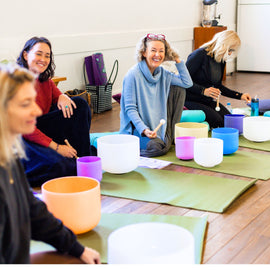
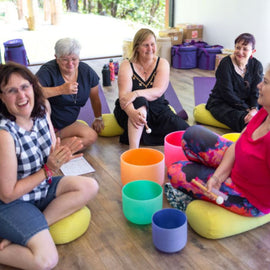
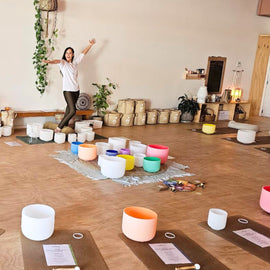
One emerging practice involves adding a five-minute mindfulness ritual at the end of a workout using breath awareness and a sound therapy bowl.
Unlike traditional cool-downs that focus solely on stretching muscles, this approach focuses on calming the mind and nervous system.

The process is simple. You can expand your service offering by incorporating this simple practice:
Participants sit comfortably after their workout and begin taking slow diaphragmatic breaths. A sound therapy bowl is gently played every 30 to 60 seconds. As the sound expands and gradually fades, attention is directed toward the breath, bodily sensations, and the feeling of recovery taking place within the body.
You softly strike a sound therapy bowl. The sound acts as an anchor for attention, helping participants remain present rather than immediately returning to external distractions.
This combination of slow breathing, mindful awareness, and sound may help encourage a faster transition from activation into recovery.
Many researchers now recognize that practices supporting nervous system regulation can positively influence stress resilience, emotional wellbeing, sleep quality, and overall recovery capacity.
The goal is not relaxation; the goal is integration.
The workout challenged the body. The cool-down helps the brain recognize that the challenge is complete.
For fitness professionals, yoga therapists, and wellness practitioners, this may represent the next evolution of exercise programming.
Instead of viewing recovery as something that happens later, recovery begins the moment the workout ends.
A five-minute mindful cool-down is what the most successful fitness professionals are implementing. By having a duty of care to support your clients and members, you can help them repeat this rhythm within their mind and body:
Great workout... The tiger is gone. You are safe now.